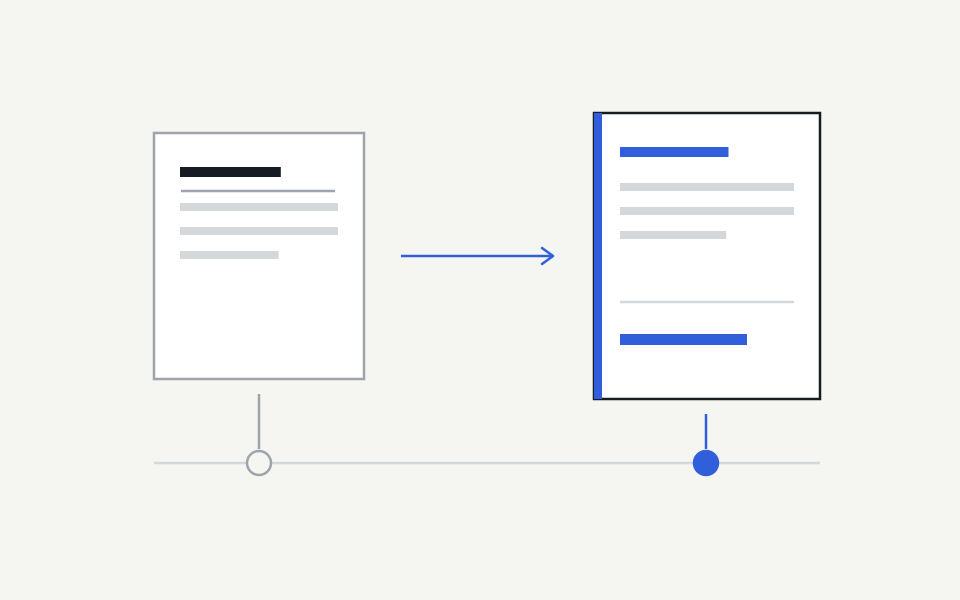
Keeping AI context current requires more than frequent synchronisation. The company must identify the authoritative source, distinguish facts from approved guidance and make access changes effective. A recently synced collection can still produce an outdated answer if it contains several competing versions without a clear source of authority.
Find the kind of staleness you actually have
An outdated answer can have several causes. A source connection may not have processed an edit. An older file may still be treated as current. Approved guidance may no longer match company practice. Or an employee may be asking in a conversation that already contains a superseded statement. Each cause needs a different repair.
Start by examining the answer’s sources and the task. Record the statement that was wrong, the expected current statement and who can confirm it. This gives the owner a concrete issue to resolve and avoids asking an administrator to reindex an entire workspace when the real problem is an unresolved company decision.
Designate a source for each important topic
Give important recurring topics a clear current source. The commercial handbook might govern payment terms; a product specification might govern current functionality; an approved engineering standard might govern release checks. Supporting sources can add detail without competing for authority.
A newer timestamp should not silently overrule that choice. For example, a sales presentation updated yesterday may contain wording copied from an old proposal. If the commercial handbook remains authoritative, the presentation should not become the source of policy merely because it was edited more recently. Make the relationship explicit and preserve historical material as historical.
Treat factual updates and guidance changes differently
Routine factual changes should be able to flow from their selected source without making someone approve every revised sentence. An updated service description or a corrected reference link is not automatically a change to how the company requires people to work.
Consequential guidance needs a deliberate owner decision. If the company changes its discount approval requirement, the responsible person should approve the new wording and its audience before publication. Preserve a record of what changed and why. This distinction keeps information fresh while maintaining accountability for rules that influence company decisions.
Handle deletion, movement and lost access
Files do not only change their text. They move between folders, become restricted, disappear or lose the integration’s permission. A connector needs to interpret these events and stop using material it can no longer justify delivering. An existing search index is not permission to keep serving content indefinitely.
Provider change feeds have their own semantics. Google Drive, for example, maintains changes for users and shared drives; an unavailable item does not always mean the underlying file was physically deleted. This is a reason to test the provider’s actual behaviour instead of assuming every system reports identical lifecycle events.
Run a small, repeatable freshness test
Choose a harmless synthetic source and record an answer that cites it. Change a distinctive fact in the source through the normal editing interface. Wait for the connection’s documented update process, start a fresh AI conversation and ask a task that needs the changed fact. Record when the edit happened and when the new answer became available.
Repeat with a superseded source and a revoked permission. The expected result is not always a replacement answer: if the current source is unavailable or authority is unresolved, a clear explanation of the gap is preferable to falling back to an old or inaccessible document. Keep those cases in the test set as the rollout grows.
- Edit a current fact and check the next eligible answer.
- Add an older conflicting source and check which source governs.
- Withdraw a source permission and check that future delivery stops.
- Change approved guidance and verify the published version is used.
Give owners a manageable review rhythm
Review high-consequence guidance when the business changes, not only when a calendar reminder arrives. A new service, organisational change or revised commercial process can be a meaningful trigger. Routine file activity should not create the same review burden as a genuine policy decision.
Track the recurring causes of corrections. If most issues come from two conflicting handbooks, resolving ownership will usually be more useful than increasing the number of connected documents. If updates are not arriving, investigate the connection and its observable sync state. A healthy context process combines source maintenance, selective approval and clear handling of missing information.
Sources and further reading
Continue with a practical next step
Put the context to work.
See how Steer connects maintained knowledge and approved ways of working.
Explore Steer